
Myofunctional Therapy in Beverly, MA
The tongue is supposed to rest against the roof of the mouth. The lips are supposed to stay closed. Breathing is supposed to happen through the nose. When those things are not happening, the muscles of the mouth and face have never learned to do them, and the effects reach further than most people expect: into how you sleep, how your jaw sits, how your face develops, and how well the airway stays open at night.
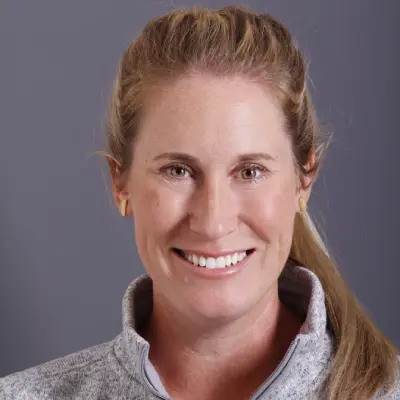
Myofunctional therapy retrains those muscles. At Kuljic DDS & Team in Beverly, it is delivered by two Qualified Orofacial Myologists, Victoria and Jesse, who work with children and adults through a structured course of therapy.

What Myofunctional Therapy Actually Is
Myofunctional therapy is exercise therapy for the muscles of the mouth and face. It retrains the tongue, the lips, the cheeks, and the muscles used for chewing and swallowing, so they do the jobs they are built for.
The goal is a specific resting position, and it is simple to describe. Lips together. Teeth lightly together. Tongue resting softly against the roof of the mouth. Breathing through the nose, day and night. That posture is what holds the airway open, guides the jaw to grow correctly in children, and keeps the tongue from falling back into the throat during sleep. When the muscles cannot hold it, everything downstream is affected.
The therapy itself is a series of exercises, prescribed for what your assessment finds. They are painless, they take a few minutes a day, and you do them at home between sessions. There is nothing invasive about any of it. It is training, the same way physical therapy is training, for muscles that happen to be in your mouth.
Signs You Might Need It
Myofunctional disorders hide in plain sight. The habits look like personality, the symptoms look like unrelated problems, and nobody connects them, sometimes for decades.
In adults
In children
In children, the stakes are higher and the window is shorter.
The face and jaws are still growing, and the tongue is the mould they grow around. Correct the muscle pattern while the bones are still forming and you change the shape of the airway for life.
Wait, and the same problem needs orthodontics, an oral appliance, or surgery to correct later.
Who Provides It
Myofunctional therapy is only as good as the person delivering it, and most dental offices that offer it do so with a hygienist who took a weekend course.
Victoria
A dental hygienist since 2006, with a Bachelor of Science in Dental Hygiene from Mount Ida College.
She completed her Orofacial Myology certification in March 2021 and has built her practice around it since. What draws her is the part of dentistry that goes past cleaning teeth and into how the mouth actually works.
Jesse
Jesse came to this work from the other side of the chair.
She went through myofunctional therapy herself, as a patient, and it changed enough about how she breathes, sleeps, and feels that she trained to do it for others.
She became a Qualified Orofacial Myologist in August 2020.
Both are Registered Dental Hygienists and Qualified Orofacial Myologists, which is a formal credential and not a weekend course.
Having two in one practice is unusual, and it is why patients come to us from across the North Shore and from Boston.
It also means you are seen by someone who does this every week, not someone fitting it around a hygiene schedule. Sessions sit a few weeks apart, which makes the distance workable even when the drive is not short.
What Treatment Looks Like
Most people complete therapy in ten sessions over about six months. That is the shape of it, though your assessment decides the details.
Your therapist examines the muscles of the tongue, lips, and cheeks, tests how you swallow, and looks at how your tongue rests and how you breathe at rest.
She checks whether a tongue-tie is restricting movement, because a tongue that physically cannot reach the roof of the mouth will not learn to, no matter how many exercises you do.
You are given a set of exercises prescribed for what the assessment found.
They are painless and take a few minutes a day. This is the part that does the work, and it happens at home, not in the chair.
You come in, your therapist checks your progress, corrects what has drifted, and moves you on to the next stage.
The exercises get harder as the muscles get stronger, the same way they would in any physical therapy.
The final stage is the point of the whole thing.
The new tongue posture, the nasal breathing, the correct swallow, all of it has to become what your body does without thinking. Therapy ends when it is no longer something you are doing and has become something you are.
If a tongue-tie is restricting the tongue, we release it first. Therapy before the release is training a muscle that is tied down, and therapy after it is what teaches the tongue to use the freedom it just got. The two work together, and the order matters.
The same logic connects therapy to palatal expansion. Widening a narrow jaw makes room for the tongue to rest against the roof of the mouth, but the tongue has to learn to hold it there. Expansion creates the space; therapy is what keeps the tongue in it, so the result lasts instead of slipping back.
Why It Matters
Breathing through the mouth is not a habit. It is a symptom, and it has consequences that compound over years.
When the tongue rests low and the mouth hangs open, the airway loses the muscular support that holds it clear. At night, that is when the tongue falls back and the airway closes, which is obstructive sleep apnea. The jaw braces to reopen it, and that bracing is clenching and grinding, which wears teeth flat and leaves the jaw sore every morning.
In a growing child, the effect is structural. The tongue is what shapes the upper jaw from the inside. When it never reaches the palate, the arch stays narrow, the teeth crowd, and the airway above it stays small. That child becomes an adult with a narrow airway, and by then the fix is surgery, expansion, or an appliance worn every night for life.
Myofunctional therapy is the one treatment in all of this that addresses the cause rather than the consequence. It does not hold the airway open for you. It teaches the muscles to hold it open themselves.
Myofunctional Therapy FAQs
Ten sessions over about six months for most people, spaced a few weeks apart. The work happens at home between sessions, in a few minutes a day. Your assessment tells us whether your case needs more or less.
No. The exercises are painless and there is nothing invasive about any part of it. It is muscle training, not treatment done to you.
Around four or five is where most children can follow the exercises. There is no upper limit, and there is no age at which it stops working. Earlier is better in children because the jaws are still growing, but adults do this successfully all the time.
Sometimes, in mild cases. More often it works alongside an oral appliance and makes it more effective, because the appliance holds the airway open and the therapy teaches the muscles to do it themselves. For some patients it reduces how much appliance they need.
If the tongue is physically restricted, yes. A tongue that cannot reach the roof of the mouth cannot be trained to rest there, and exercises alone will not free it. We check for this at the assessment, and if a release is needed we do it, then the therapy teaches the tongue to use the movement it just gained.
Coverage for myofunctional therapy varies, and many plans do not cover it directly. We tell you plainly what your plan does and does not cover before you commit to anything.
Because it is not taught in most dental training, and it sits outside what a standard exam is looking for. That is changing, but slowly. It is also why two Qualified Orofacial Myologists in one practice is unusual enough to be worth mentioning.
The exercises are done at home, and that is where the work happens. What you cannot do at home is the assessment. Which muscles are failing, whether your swallow is compensating, whether a tongue-tie is restricting the tongue, and which exercises will fix what: that is what the therapist determines, and it is different for every mouth. Exercises pulled off the internet are generic, and generic exercises train the wrong things. The programme is what makes it work, not the exercises themselves.
Myofunctional therapy is one part of our airway and sleep dentistry, and it is often the piece that makes the rest of it hold.
If any of this sounds like you, or like your child, start with an assessment. Call (978) 922-4200 or request a consultation, and we will tell you honestly whether therapy is what you need.