
MARPE & MSE for Teens and Adults in Beverly, MA
A narrow upper jaw crowds the teeth, restricts the nasal airway, and strains how you breathe and sleep. For years, correcting it in an adult meant major jaw surgery. It no longer does.
MARPE and MSE widen the upper jaw by anchoring into bone, not teeth, which makes real maxillary skeletal expansion possible well beyond childhood.
Widening the jaw also enlarges the nasal floor and gives the tongue room to rest where it belongs, both of which open the airway.
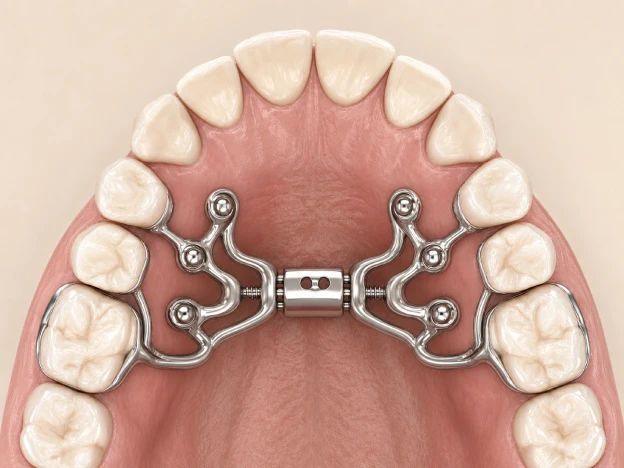
A Narrow Jaw Is More Than a Crowding Problem
A narrow upper jaw rarely shows up as one problem.
It crowds the teeth, but it also lowers the roof of the mouth into the nasal space above it, leaves the tongue no room to rest where it should, and narrows the airway you breathe through at night.
The crowded teeth are the part you see.
The restricted breathing is the part you feel, often without connecting it to your jaw.
This is why we treat expansion as an airway decision, not only an orthodontic one. Widening the jaw creates room in three places at once: for the teeth, for the tongue, and for the air.
What MARPE and MSE Are
MARPE (miniscrew-assisted rapid palatal expansion) and MSE (maxillary skeletal expander) are the same idea built for two different stages of life. Both widen the upper jaw. What sets them apart from the expanders used on young children is where they push from.
A childhood expander pushes against the teeth, because a child's palate is still soft down the middle and gives way easily. By the late teens and into adulthood, that midline seam hardens, and pushing on the teeth only tips them outward without moving the bone.
MARPE and MSE solve this by anchoring into the palate itself with small titanium miniscrews. The force goes into the bone, not the teeth, which is what makes real skeletal expansion possible in a jaw that has stopped growing.
MSE for Teenagers
In the teenage years the jaw is nearly finished growing but the midline seam has not fully fused.
MSE delivers controlled skeletal force at exactly the stage when a standard expander starts to fail, widening the bone cleanly instead of flaring the teeth.
MARPE for Adults
Adulthood was long considered too late for expansion without surgery.
It is not. By anchoring into bone, MARPE widens the upper jaw in patients in their twenties, thirties, and beyond, opening the same skeletal room a surgical procedure would, without the surgery in most cases.
What Expansion Changes
Widening the upper jaw does more than straighten crowded teeth. Because the roof of the mouth is also the floor of the nose, expansion opens the nasal airway at the same time.
For many patients that is the change they feel first: air moving through the nose that never moved freely before.
Room to Breathe Through Your Nose
Expanding the upper jaw lifts the floor of the nasal cavity and widens it, which lowers the resistance air meets on the way in.
Patients who lived with chronic congestion, mouth breathing, or a nose that never felt open often notice the difference within weeks.
This is why expansion sits at the center of our airway and sleep care, not off to the side.
A Place for the Tongue
A narrow palate leaves the tongue nowhere to rest but low and back, where it crowds the airway during sleep.
Widening the jaw gives the tongue room to sit up against the roof of the mouth, where it belongs. When the tongue has a home, it stops falling into the airway at night.
This is also why expansion and myofunctional therapy work together: one makes the room, the other trains the tongue to use it.
Support for Better Sleep
Congestion, restless nights, and waking up unrefreshed often trace back to how little air the airway lets through.
By widening the nasal passage and freeing the tongue, expansion addresses two of the physical restrictions behind disrupted breathing during sleep.
For patients dealing with snoring or diagnosed sleep apnea, it becomes part of a larger plan, alongside airway screening and, where needed, other treatment.
Straighter Teeth, Broader Smile
Crowding is often a space problem, not a tooth problem.
When the jaw widens, the teeth have room to align, and the smile broadens at the corners where a narrow arch leaves dark gaps.
The alignment that follows expansion rests on a wider foundation, which is more stable than teeth forced straight in a jaw too small to hold them.
Real Expansion, Real Change
Every case below was treated here by Dr. Kuljic. Each came in with a narrow jaw and the problems that follow it: crowded teeth, blocked breathing, broken sleep. The scans and photographs show what changed.
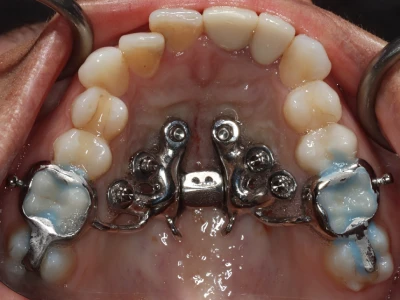
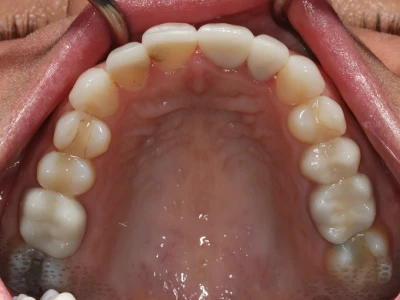
Chronic Nasal Congestion, Treated at the Jaw
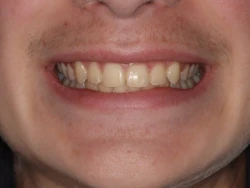
This patient came in with severe allergies and chronic trouble breathing through her nose.
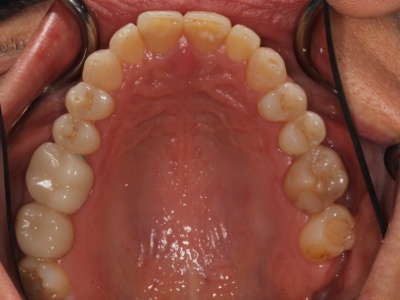
MARPE widened the upper jaw skeletally, and conventional expansion opened the lower arch, together making room for the tongue to rest where it belongs, up against the roof of the mouth. That change in tongue posture supported a healthier breathing pattern and better function day to day. The broader smile was a welcome bonus.
The point of the treatment was the foundation underneath it: breathing, tongue posture, and long-term oral health.
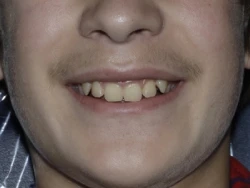
Skeletal Expansion at 15, Before the Seam Fused
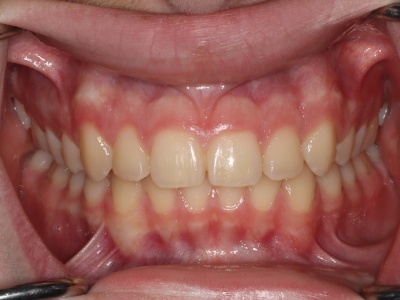
This patient came in at fifteen with a narrow upper jaw: crowded teeth, a constricted arch, and the disrupted sleep that a blocked airway brings.
We treated it with MSE, expanding the jaw skeletally while the midline seam was still open enough to respond cleanly.
The expansion widened the arch, aligned the teeth into the room it created, and opened the airway. The change patients notice in the mirror is the broader, straighter smile. The change this patient felt was steadier sleep, easier breathing, and the focus that follows a rested night.


An Adult Case: Expansion, Therapy, and a New Smile
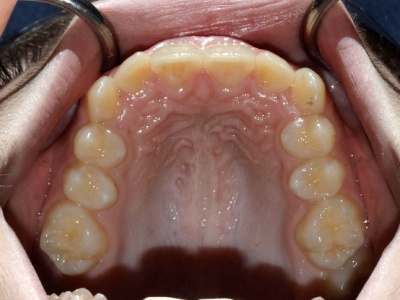
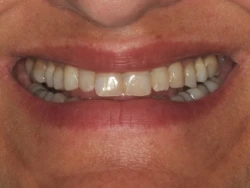
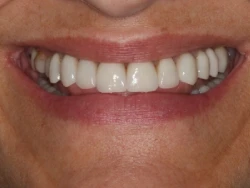
This patient came as an adult wanting three things: a better facial profile, deeper sleep, and a smile worth showing. One treatment could not deliver all three, so we combined them.
MSE widened the upper jaw, opening the arch and the airway behind it. Myofunctional therapy retrained the tongue to hold its new position, so the expansion stayed and the airway stayed open. Porcelain veneers completed the smile once the foundation beneath it was stable and wide. The breathing and the profile came from the expansion. The polish came last, and only after the structure was right.

What Skeletal Expansion Looks Like on a Scan
That is what expansion looks like on a face. This is what it looks like at the bone. Skeletal expansion is measurable: a CBCT scan before and after shows exactly how much the upper jaw widened, in millimeters.
These are scans from an adult patient treated here. The measurements track the same skeletal landmarks before and after expansion. The nasal width opens, the palate widens, and the airway gains room that was not there before. This is bone that moved, not teeth that tipped.
Skeletal width before and after expansion, measured in millimeters.
The midpalatal suture separating as the bone widens.
The difference between dental expansion and skeletal expansion is the difference between a change that holds and one that slowly slips back. Teeth pushed wider drift in again over the years. Bone that has widened and filled back in stays widened. The scan is how we confirm the jaw itself moved, which is what makes the result last.
Am I a Candidate
Expansion is not the answer to every narrow smile, and the only way to know is a 3D CBCT scan that shows the bone, the airway, and how much room the palate actually has. But certain patterns point toward it strongly.
Signs Expansion May Be Worth Evaluating
Teenagers
The jaw is nearly finished growing but the midline seam has not fully fused.
This is a strong window: MSE achieves clean skeletal expansion at the stage when a standard expander begins to fail, before the seam hardens completely.
Adults
Adulthood is not too late. By anchoring into bone, MARPE widens the jaw in patients through their twenties, thirties, forties, and beyond.
In older adults, where the midline seam has fully fused and would resist expansion alone, a minimally invasive step releases the seam so expansion proceeds predictably. It is done in the office, not in a hospital, and it is what makes skeletal expansion reliable at any adult age.
What to Expect During Treatment
Expansion is gradual, visible, and easier to live with than most patients expect. Here is what the process actually feels like.
A Gap Between the Front Teeth
As the jaw widens down the middle, a space opens between the two front teeth.
It looks dramatic, but it is the clearest sign the treatment is working: the bone is separating exactly as it should. The gap closes later with aligners or braces once expansion is complete.
A Short Adjustment Period
For the first several days, the tongue learns the appliance, speech adjusts, and swallowing feels different.
This passes quickly. Placing the anchors causes mild soreness for a few days, managed with over-the-counter pain relief.
Gradual Widening
The appliance is turned a little each day on a set schedule, widening the jaw a fraction at a time.
Active expansion takes a few months. The appliance then stays in place while new bone fills in the widened seam, usually four to six months in total, so the result is stable before anything else begins.
Cleaning Around the Appliance
Food collects under the appliance, so a water flosser and a daily rinse become part of the routine while it is in place.
It is a small habit for the length of treatment.
MARPE and MSE FAQs
It works on adults. The difference is how. A childhood expander pushes on the teeth, which stops working once the midline seam hardens. MARPE anchors into the bone itself, so it widens the jaw skeletally even after growth has finished. A CBCT scan confirms whether your bone will respond before treatment begins.
No, not in the way jaw surgery is. There is no hospital, no general anesthesia, no cutting the jaw apart. In some adults whose midline seam has fully fused, a quick, minimally invasive step in the office helps the seam release so expansion proceeds predictably. For most patients, expansion happens with the appliance alone.
Active expansion takes a few months of daily adjustment. The appliance then stays in place while new bone fills the widened seam, four to six months in total before the next stage begins. The result needs that time to become stable.
Yes, and it is a good sign. As the jaw separates down the middle, a space opens between the front teeth. It closes later with aligners or braces once expansion is finished. The gap means the bone is doing exactly what it should.
Widening the upper jaw also widens the floor of the nose above it and gives the tongue room to rest away from the airway. For many patients that means easier nasal breathing and steadier sleep. For anyone with diagnosed sleep apnea, expansion becomes part of a broader plan rather than a standalone cure.
Many patients do. Skeletal expansion for adults is offered in relatively few places, so patients come to Beverly from across the North Shore and Greater Boston. The initial CBCT scan and consultation determine the plan before you commit to the drive.
MARPE and MSE are part of our functional orthodontics care, where we treat a narrow jaw as an airway and structural problem, not only a crowding one. If you have been told expansion in an adult meant surgery, or you have been searching for a provider who does this, it starts with a scan.
Patients travel to Beverly for this from across the North Shore and Greater Boston. Call (978) 922-4200 or request a consultation, and a CBCT scan will tell us honestly whether expansion is right for you.