
Airway Screening in Beverly, MA
Airway screening measures how you breathe, how you sleep, and how your jaw and airway are built.
Over three appointments, we gather three-dimensional imaging, overnight oxygen data, and a full assessment of your bite and oral function.
That record shows where your breathing breaks down, so treatment corrects the cause instead of quieting a symptom.

Who an Airway Screening Is For
Airway problems rarely announce themselves as breathing problems. They show up as exhaustion, worn teeth, a restless child, or dental work that keeps failing.
What the Airway Screening Includes
An airway screening combines three-dimensional imaging, overnight monitoring, and a full assessment of how your teeth, bone, and soft tissue work together. Each piece measures a different part of how you breathe.
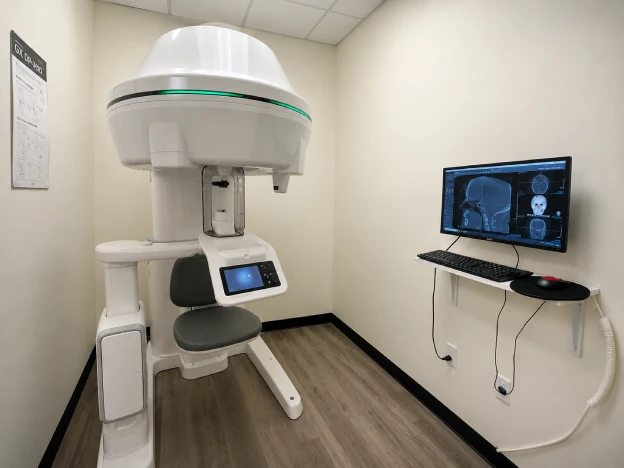
CBCT Scan
A cone beam scan images your airway in three dimensions, including your nasal passages, sinuses, and windpipe.
The doctors use it to measure your jaw and arch development, tonsils, adenoids, turbinates, and the space you breathe through.

High-Resolution Pulse Oximetry
You take a wrist-worn monitor home and wear it for four nights.
It records your heart rate and oxygen levels while you sleep, which shows the doctors whether you reach deep sleep, hold adequate oxygen, and breathe without distress overnight.
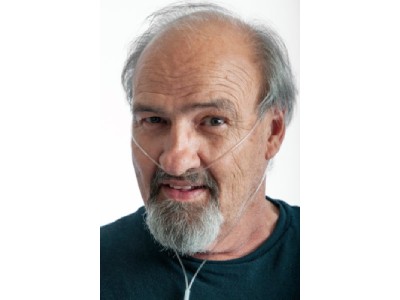
Capnometry
You wear a nasal cannula connected to a recording device in the office for about ten minutes.
It measures how efficiently you inhale and exhale.

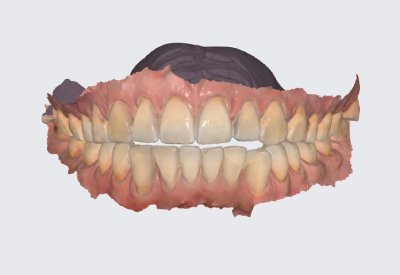
Study Models
We take impressions and build models of your teeth.
The models give us a starting reference, measure how your teeth meet when you bite, and guide which appliances fit your treatment.
Structural Evaluation
We assess your teeth and bone to read your current growth and development.
You complete several questionnaires about your symptoms, and we take photographs and measurements to locate structural underdevelopment and areas of concern.

Myofunctional Assessment
We evaluate your tongue, lips, and cheeks for strength and coordination.
We check your swallow, lip seal, and cheek function to confirm the tongue and orofacial muscles work the way they should.
What the Screening Involves
The full airway screening runs across three appointments.
We complete the CBCT scan, study models, structural evaluation, photographs, and capnometry, and send you home with the pulse oximeter for four nights.
We evaluate your tongue, lips, cheeks, and swallow function. This often runs in tandem with the first appointment.
We walk you through everything the screening found and lay out the treatment that fits. This appointment happens in the office or over Zoom.
What Happens After Your Screening
The screening turns your breathing, your sleep, and your bite into one clear record. From there, treatment targets the cause we found, not the symptom that sent you in.
For a narrow upper jaw that crowds the airway, expansion widens the arch and opens the space you breathe through. See MARPE and MSE.
For airway-driven snoring and obstructive sleep apnea, a custom oral appliance holds your jaw forward through the night. See snoring and sleep apnea treatment.
For weak or uncoordinated tongue and orofacial muscles, myofunctional therapy retrains how you breathe, swallow, and rest your tongue. See myofunctional therapy.
Most treatment plans combine more than one of these. The screening is what tells us which, and in what order.
Root Canal FAQs
No. Every part of the screening is non-invasive. The scan, the oximeter, the capnometer, and the impressions all collect data without any discomfort.
The screening runs across three appointments. The first gathers your imaging and models, the second assesses your oral function, and the third walks you through the findings. You wear the take-home oximeter for four nights between visits.
Yes. A cone beam scan uses a focused, low-dose beam and captures your airway in seconds. It gives the doctors a three-dimensional view that a standard dental X-ray cannot.
Yes. The consultation appointment lays out exactly what the data shows and which treatment fits, whether that means expansion, an oral appliance, myofunctional therapy, or a combination.
Everything we treat in airway and sleep begins here, with a clear picture of how you breathe. See where it all connects across airway and sleep dentistry.
Call us at 978-922-4200 or request a consultation to book your airway screening.