
Dentures in Beverly, MA
Losing teeth changes how you eat, how you speak, and how you feel about your smile. Dentures replace missing teeth with a custom set that brings back function and appearance, whether you are missing a few teeth or a full arch.
At Kuljic DDS & Team in Beverly, we fit each denture to how your mouth actually works, so it stays comfortable, chews properly, and looks like a natural set of teeth rather than a replacement.

What are Dentures?
A denture is a removable replacement for missing teeth and the tissue around them. Modern dentures are a long way from the loose, obvious plates of the past. Built from durable acrylic and, where needed, porcelain or metal, they are designed to fit your mouth precisely and to look natural when you talk and smile.
Dentures suit a range of situations, from replacing a few teeth in one part of the mouth to rebuilding a full upper or lower arch. Some rest on the gums, others anchor onto dental implants for a firmer hold. Which one fits depends on how many teeth are missing, the condition of your gums and jawbone, and how much stability you want day to day.
Types of Dentures
The right denture depends on how many teeth are missing and how much stability you want. There are three main options, and they range from a removable set that rests on the gums to a fixed set anchored on implants.
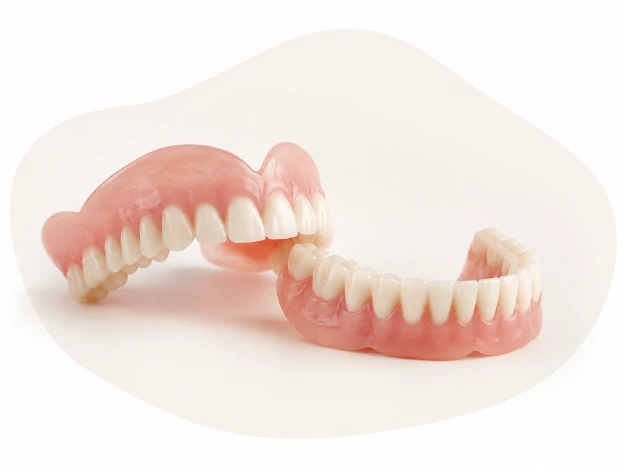
Complete Dentures
A complete denture replaces a full arch of teeth, upper, lower, or both. It rests on the gums, held by natural suction and, when needed, a little adhesive, and it rebuilds the whole row at once. The base is shaped from tooth-colored acrylic to match your gum tissue, and the teeth set into it are chosen to suit your face and coloring, so the result looks like a natural smile rather than an obvious plate.
A complete denture is the right choice when all or nearly all the teeth in an arch are gone or failing. Beyond filling out your smile, it restores the chewing and speech that missing teeth take away, and it supports the muscles of your face, which lose their backing once the teeth behind them are gone. Most complete dentures last several years before the fit needs refreshing, since the gum and bone underneath slowly change shape over time.
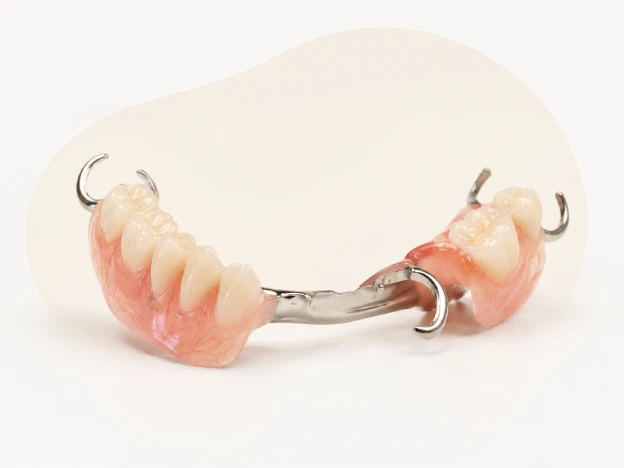
Partial Dentures
A partial denture fills the gaps when you still have some healthy natural teeth. It sits on a base, either acrylic or a lightweight metal framework, and clasps onto the teeth that remain, closing the spaces without disturbing the healthy teeth. Like a complete denture, it lifts out for cleaning.
A partial does more than restore your smile across the gaps. The teeth around an empty space tend to drift into it over time, which throws off your bite and makes the next problem harder to fix. A partial holds those teeth in position while it replaces the missing ones. For many people it is a practical, lower-cost way to replace several teeth without the surgery an implant involves or the full commitment of a bridge.
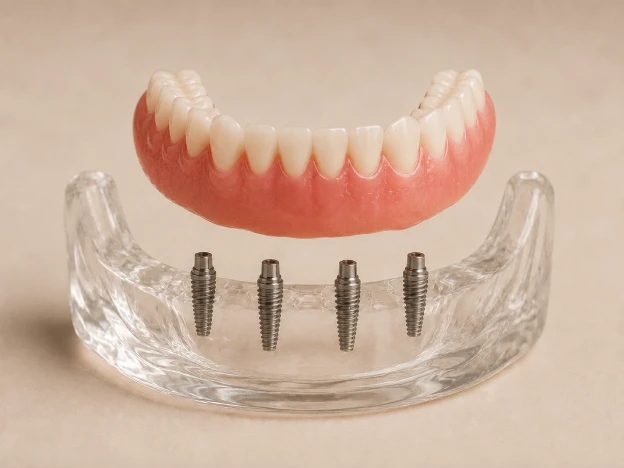
Implant-Supported Dentures
If a denture that rests on the gums still feels loose, especially on the lower jaw, implants can anchor it in place. Two to four implants per arch hold the denture firmly, so it does not slip while you eat or speak, and they slow the bone loss that a conventional denture does nothing to stop.
This is often the answer for anyone tired of adhesives and movement.
Because this option combines two treatments, it has a page of its own. See implant-supported dentures for how it works, the All-on-4 approach, and what it costs.
Who Is a Candidate for Dentures?
Most people missing several teeth, a full arch, or all of their teeth are candidates for dentures. The starting point is always an exam, where we look at how many teeth are missing, the health of any that remain, and the condition of your gums and jawbone. From there we recommend the type that fits your situation and your goals.
Dentures make sense in a few common situations:
Even if another dentist told you that gum disease or bone loss rules out treatment, it rarely does. Gum disease is treated first, and a denture is designed around what your mouth needs.
At your consultation we look at the whole picture and lay out what is realistic for you.
How Dentures Are Made
A denture is custom-built for your mouth over a series of short visits. Here is how the process works, from the first impression to the day you leave with your new smile.
We start with an exam and take impressions of your gums and any remaining teeth.
These become the precise model your denture is built on, so it fits the exact shape of your mouth.
We record how your upper and lower jaws meet and measure the space between them.
This is what makes a denture chew properly and sit at the right height, rather than just filling the space.
Before the final denture is finished, you try in a wax version with the teeth set in place.
We check the look, the fit, and the bite together, and adjust the shape, shade, and position until it is right.
Once the design is approved, the lab completes your denture and we fit it.
We make any final adjustments so it sits comfortably, and we show you how to insert, remove, and care for it.
The number of visits varies with your case, and if teeth need removing first, we plan a temporary denture so you are never left without teeth while your gums heal and the final denture is made.
Living With Dentures
A new denture takes a short while to get used to, and a little daily care keeps it comfortable and lasting. Here is what to expect and how to look after it.
Getting Used to a New Denture
The first couple of weeks with a new denture feel different, and that is normal.
It may seem bulky at first, and speaking or eating can take practice. Start with softer foods cut small, and chew on both sides at once to keep the denture stable.
Within a few weeks your mouth adjusts and the denture starts to feel like part of you. If a spot stays sore, that is a sign the fit needs a small adjustment, so come in and we will settle it quickly.
Daily Care
Clean your denture every day to keep it free of plaque and staining.
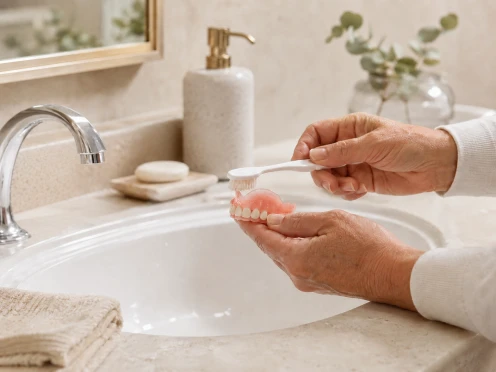
Take it out and brush it with a soft denture brush and mild soap or a denture cleaner, not regular toothpaste, which is too abrasive and scratches the surface. Rinse it after meals when you can. Brush your gums, tongue, and palate each morning too, which keeps the tissue healthy and your mouth fresh.
If you still have natural teeth, care for them as normal, and clean carefully around any clasps where plaque collects.
Handle the denture over a folded towel or a basin of water, since it can crack if dropped onto a hard surface. Keep it moist when it is out, in water or a soaking solution, so it holds its shape.
Overnight and Long-Term
Take your denture out at night.
Your gums need the rest, and going without it overnight lowers the risk of irritation and infection. Leave it soaking while you sleep. Over the years, your gums and jawbone slowly change shape, so a denture that once fit well will loosen in time. That is expected, and we reline or remake it to restore the fit rather than leaving you with one that slips.
Keep up regular checkups so we catch a loose fit, a crack, or a worn tooth early, while it is a simple fix.
Benefits of Dentures
A well-made denture gives back far more than the look of a full smile.
Cost of Dentures
What a denture costs depends on your case, so the honest answer comes after an exam, not before it.
These are the factors that move the number:
How much needs replacing
A partial denture that fills a few gaps costs less than a complete denture that rebuilds a full arch. Two arches cost more than one.
Preliminary treatment
If teeth need removing first, or gum disease needs treating before a denture can fit properly, those steps carry their own cost and are planned into the estimate.
Materials and construction
A partial on a lightweight metal framework, a complete denture in premium acrylic with better-quality teeth, and a basic economy denture are not the same appliance, and they do not carry the same price or the same lifespan.
Implant support
Anchoring a denture on implants raises the upfront cost and changes the long-term math, since it holds its fit far longer than one that rests on the gums.
After your exam we give you a written estimate that lays out the options side by side, so you can see what each one costs and what it gives you.
Insurance and Payment
Most dental insurance plans cover part of the cost of a denture, often around half, though every plan sets its own limits, deductibles, and annual maximums. We check your benefits, tell you plainly what your plan covers, and help you get the most out of it.
If you have no insurance, or your plan falls short of what you need, we offer financing options and an in-office wellness plan that spread the cost into manageable payments. Money should not be the reason you keep living without teeth, so tell us your budget and we will work with it.
One thing worth weighing: the cheapest denture is rarely the best value. A poorly fitting denture is uncomfortable, wears out sooner, and often costs more over time in adjustments and replacements. A well-made one fits, lasts, and does its job.
Real Patient Results
Every denture below was made in our office. Here is what each patient was facing, and what we did about it.
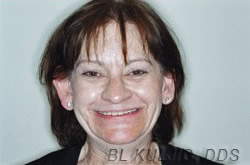

A new upper denture, designed around her smile
Her upper teeth could not be saved, and what worried her most was how the new denture would look.
We removed the upper teeth and fitted a full denture shaped to suit her face, so she got back a smile she was comfortable showing, and the ability to chew without discomfort.
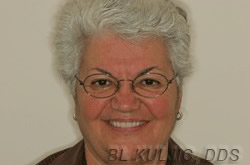
Rebuilt after years of gum disease
Long-standing gum disease had gone past the point where treatment could save her teeth, and it had taken bone with it. She wanted something that still looked like her own smile, only brighter.
We removed the failing teeth, fitted an interim denture while she healed, and made her final denture to resemble the teeth she had known, a shade lighter than before.

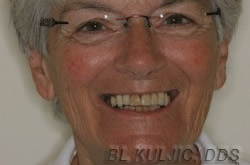
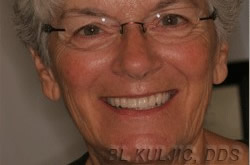
From loose dentures to implant-supported stability
She struggled to chew and speak, and wanted a solution that would hold.
Because the prognosis for her remaining teeth was poor, we moved her to an implant-supported denture, which anchored the fit and gave her back the chewing strength and clear speech she had lost.
When a denture will not stay put, implants can anchor it. See how implant-supported dentures work.
Denture FAQs
Most cases take several weeks across a handful of short visits, from the first impressions to the fitting. If teeth need removing first, we allow time for your gums to heal, and we fit a temporary denture so you are never left without teeth while you wait.
A well-made denture is built to look like a natural set of teeth, matched to your face and coloring, so it is not obvious. We work on the shade, shape, and position of the teeth at the try-in stage, before anything is finished, until it looks right to you.
Start with softer foods cut into small pieces while you adjust, and chew on both sides at once to keep the denture steady. Within a few weeks most people are back to a wide range of foods. Very hard or sticky items stay difficult with a conventional denture, and that is one reason people choose implant support.
Yes. Your gums need a rest from the pressure, and taking the denture out overnight lowers the risk of irritation and infection. Leave it soaking while you sleep, which also keeps it from drying out.
A well-made denture lasts several years, but the fit changes before the denture does. Your gums and jawbone slowly reshape after tooth loss, so a denture that fit well at first will loosen over time. We reline or remake it to restore the fit, rather than leaving you with one that slips.
Usually, yes. A loose denture often means the bone underneath has changed shape and the denture needs relining or replacing. Come in and we will find out why it is loose. If it keeps happening, anchoring the denture on implants solves the problem at its source.
Most plans cover part of the cost, often around half, though limits and deductibles vary by plan. We check your benefits and tell you plainly what yours covers, then look at financing for whatever your plan does not.
Dentures are one of several ways we replace missing teeth. If you are weighing your options, see the full range of our restorative dentistry.
Losing teeth is not the end of eating well or smiling freely, and getting them back starts with a conversation. Call (978) 922-4200 or request a consultation, and we will show you what is possible.