
Gum Therapy and Grafting in Beverly, MA
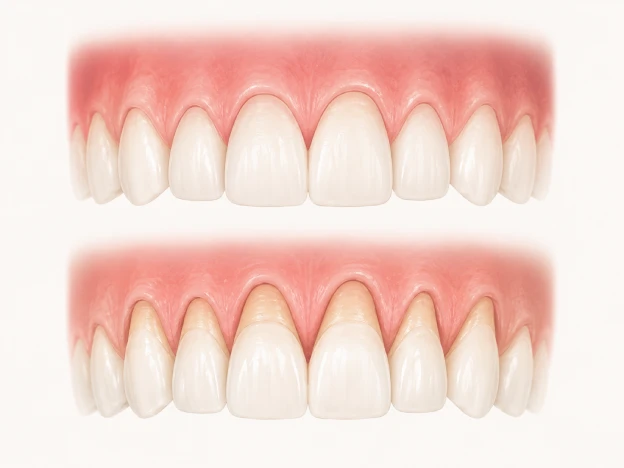
Receding gums and bleeding gums are not cosmetic problems.
They signal an infection or a structural weakness that costs you teeth if it runs unchecked. We treat both, from deep cleaning that stops early gum disease to tissue grafting that rebuilds a receded gum line, with an in-house periodontist handling the surgical work.
How to Tell Your Gums Need Treatment
Gum problems announce themselves early, if you know what to watch for. Any of these signs means the tissue supporting your teeth is under attack.
Two Kinds of Gum Recession
Not all receding gums have the same cause, and the right treatment depends on which kind you have. We treat two.
Recession From Thin, Fragile Tissue
Some people are born with thin, delicate gum tissue that wears back over time, often in patients who clean their teeth well.
The gums recede without infection, exposing the root and leaving the tooth sensitive. Grafting rebuilds the lost tissue and protects the root.
Recession From Gum Disease
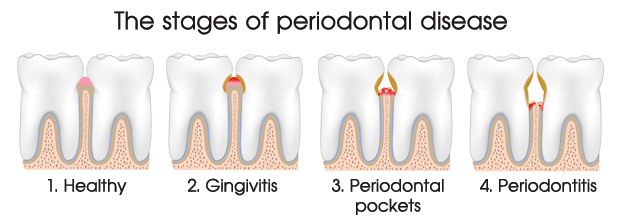
Bacterial infection destroys gum tissue and the bone underneath it.
Here the recession comes with the other marks of periodontitis: bleeding, swelling, and loosening teeth. Treatment stops the infection first, then rebuilds what the disease took.
How We Treat Gum Disease and Recession
Treatment follows the cause. Early gum disease responds to deep cleaning. Advanced recession and exposed roots need surgical repair. Most patients start with one and move to the other only if the gums need it.
Scaling and Root Planing
Scaling and root planing is a deep cleaning below the gum line, where a regular cleaning cannot reach.
We clear the plaque and tartar that feed the infection, then smooth the root surfaces so the gums can reattach and heal.
This stops early and moderate gum disease before it costs you bone and teeth.
Gum Grafting
When the gums have already receded and the root sits exposed, grafting rebuilds the lost tissue.
Our in-house periodontist performs a minimally invasive graft using donor tissue from a tissue bank, not tissue cut from the roof of your mouth. That single choice changes the experience: no second surgical site, far less discomfort, faster healing, and enough tissue to graft several teeth in one session.
Covering the exposed root ends the recession and protects the tooth from decay and sensitivity.
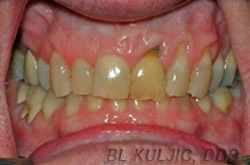
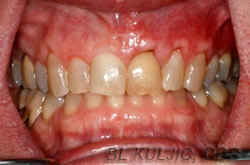
Real Patient Results
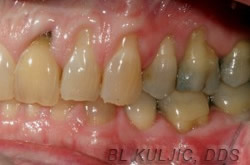
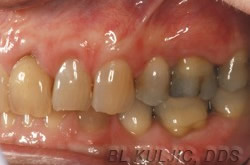
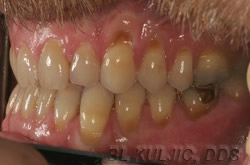
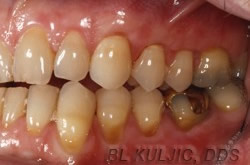
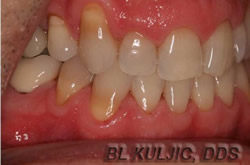
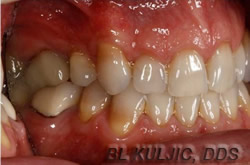
Every case below is a patient treated here, healed and photographed. Gum grafting and recession repair restore the gum line, cover the exposed root, and settle the sensitivity that comes with it.
Gum Therapy and Grafting FAQs
The graft uses donor tissue from a tissue bank, so there is no second surgical site on the roof of your mouth. Most patients report minimal discomfort and a quick recovery.
Healing is faster than traditional grafting because there is no donor site to heal. Most patients return to normal routines within days and let the graft settle over the following weeks.
No. Once gum tissue recedes, it does not regenerate. Grafting is the only way to rebuild the lost tissue and cover the exposed root before the recession worsens.
Some patients need one treatment, others need periodic deep cleanings to keep gum disease in check. After treatment, regular periodontal maintenance visits monitor your gums and catch any return of infection early.
Yes. Healthy gums do not bleed. Bleeding is the earliest warning of gum disease, and the easiest stage to treat before it reaches the bone.
Everything we treat here protects the same thing: the gum and bone that hold your teeth in place.
See how gum care fits the bigger picture across restorative dentistry. Call us at 978-922-4200 or request a consultation to have your gums evaluated.